From fiber splice attenuation to Kubernetes pods.
Ground-truth engineering at scale.
Principal Solutions Architect & Cloud Modernization Strategist
Legacy Decomposition · DevSecOps · Systems Reliability (FMEA/FTA)
Cross-layer Solutions Architect with 15 years of progressive engineering experience specializing in legacy modernization and monolithic system decomposition into resilient, cloud-native microservices architectures. Bridges physical infrastructure failure modes (L1 fiber/FTTH, $93M CAPEX scope) to distributed multi-cloud platforms (L7 K8s/GitOps) and quantitative risk modeling. Empaneled Subject Matter Expert across global expert networks (VisasQ, Coleman Research), delivering retained technical due diligence and modernization assessments for institutional investors. Integrates standardized reliability engineering (IEC 61025 FTA, IEC 60812 FMEA, and ISO 31000 Risk Governance) with capital governance principles to eliminate single points of failure (SPOF), optimize deployment security, and protect enterprise EBITDA integrity.
Assigned under the Directorate of Operation in 2013. Principal Cloud Architect today.
Ground-truth failure mode analysis across every layer of the stack.
Most cloud architects treat infrastructure purely as software abstractions. My practice evaluates systems across physical plant constraints, mathematical fault trees, and capital exposure.
Assigned within the Directorate of Operation for Telkom Indonesia Group's nationwide IDR 1.5T ($93M) copper-to-FTTH program. Governed ODN attenuation compliance, OSP splicing QA, and BSS/OSS ETL data reconciliation (Oracle, PostgreSQL, SOAP).
Authored peer-supervised research applying IEC 60812 (FMEA) and IEC 61025 (FTA) on live FTTH fulfillment architectures. Coupled with a Bachelor of Economics (S.E.), translating engineering error budgets into CAPEX protection and EBITDA metrics.
GCP Professional Cloud Architect. Multi-Cloud (AWS, GCP, Azure, Alibaba), Kubernetes (GKE/EKS/AKS), Terraform IaC, GitOps (Flux CD), CI/CD security gating (OWASP ZAP, SonarQube), and zero-downtime monolithic decomposition for FinTech and Logistics.
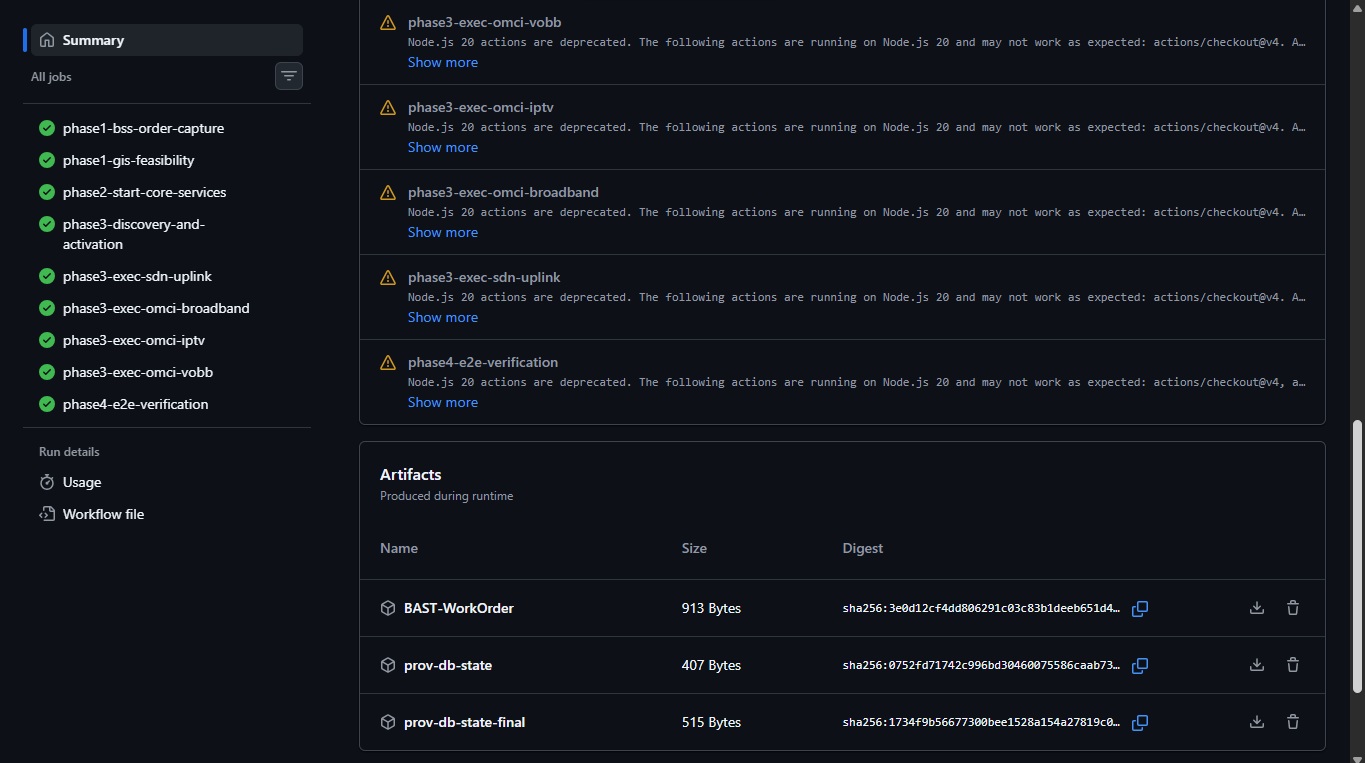
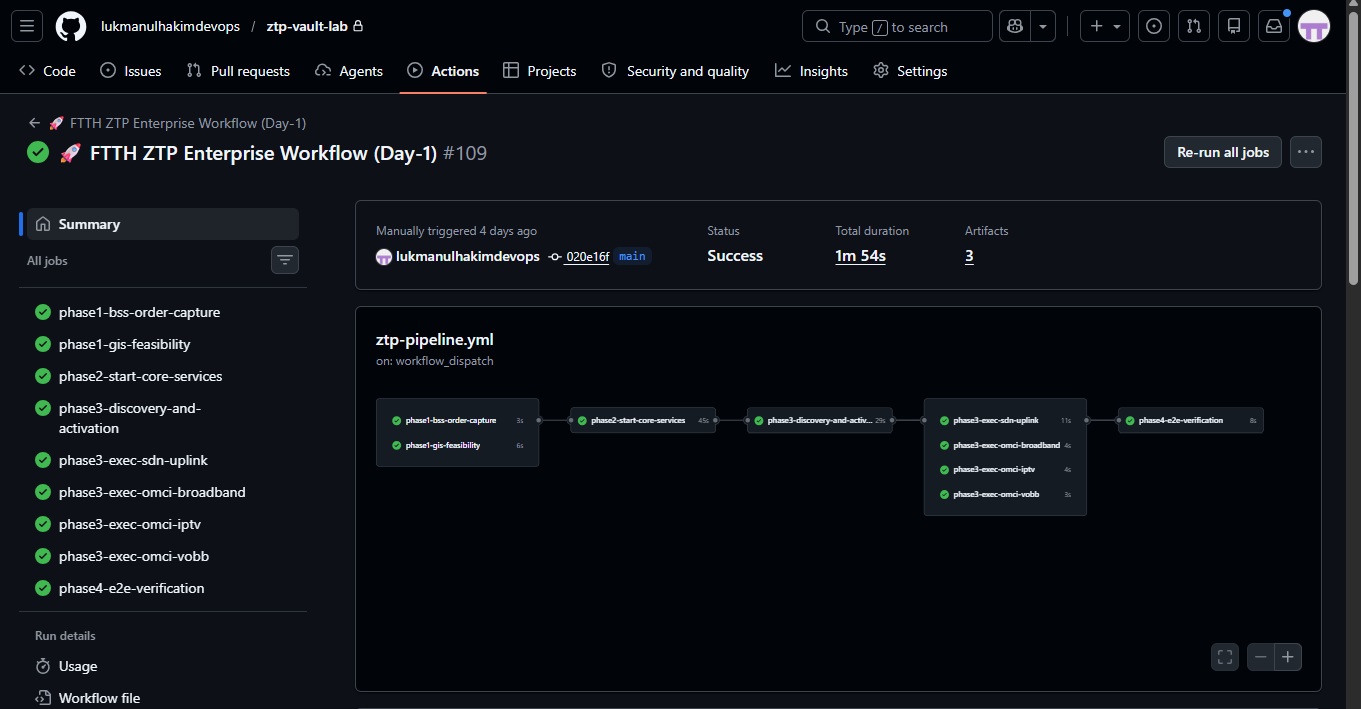
Deconstructing legacy monolithic bottlenecks into autonomous DAG orchestration pipelines. Decoupled BSS-OSS architecture eliminates financial revenue leakage and establishes automated compliance verification.
Architectural Deep Dive · 17 Min
The Blueprint, Explained: When Perfect Code Collides with the Physics of the Streets
Every principle applied in modern cloud architecture was first enforced as a physical constraint during national infrastructure rollout.
| Pillar | Physical Logic (Layer 1 OSP) | Cloud-Native Translation (Layer 7) |
|---|---|---|
| I. IDENTIFICATION | Asset Tagging: Every cable must possess a unique coordinate ID before burial. An untagged cable represents unquantifiable capital loss. | Immutable Tagging: Every cloud resource and Kubernetes pod carries mandatory metadata labels (CostCenter, Owner, TTL) or CI/CD pipelines reject deployment. |
| II. RESILIENCE | Preventive Maintenance: Detecting optical signal attenuation before fiber fracture. Legacy MTTR was 15 hours. | Self-Healing Systems: Kubernetes Liveness/Readiness probes and Horizontal Pod Autoscalers isolate failure domains. MTTR <300ms. |
| III. EFFICIENCY | Route Optimization: Mapping shortest physical optical routes to conserve materials and protect CAPEX. | FinOps & Rightsizing: Automated workload scheduling and vCPU rightsizing that reduce cloud OPEX by up to 40% without compromising SLA throughput. |
| IV. SECURITY | Physical Plant Hardening: Securing access to Optical Distribution Cabinets (ODC) and manholes to eliminate tampering vectors. | Zero Trust Architecture: Strict mTLS service mesh, IAM Least Privilege, and automated CI/CD security scanning (OWASP ZAP, SonarQube) mitigating 60% of vulnerabilities. |
| V. AIOps & AGENTIC AI | Predictive Telemetry: OTDR trace analytics and historical outage correlation to predict fiber disruption before customer impact. | Autonomous Infrastructure: Dynamic anomaly detection and Agentic AI workflows (Azure AI Studio, Semantic Kernel) for self-healing operational governance and token lifecycle management. |
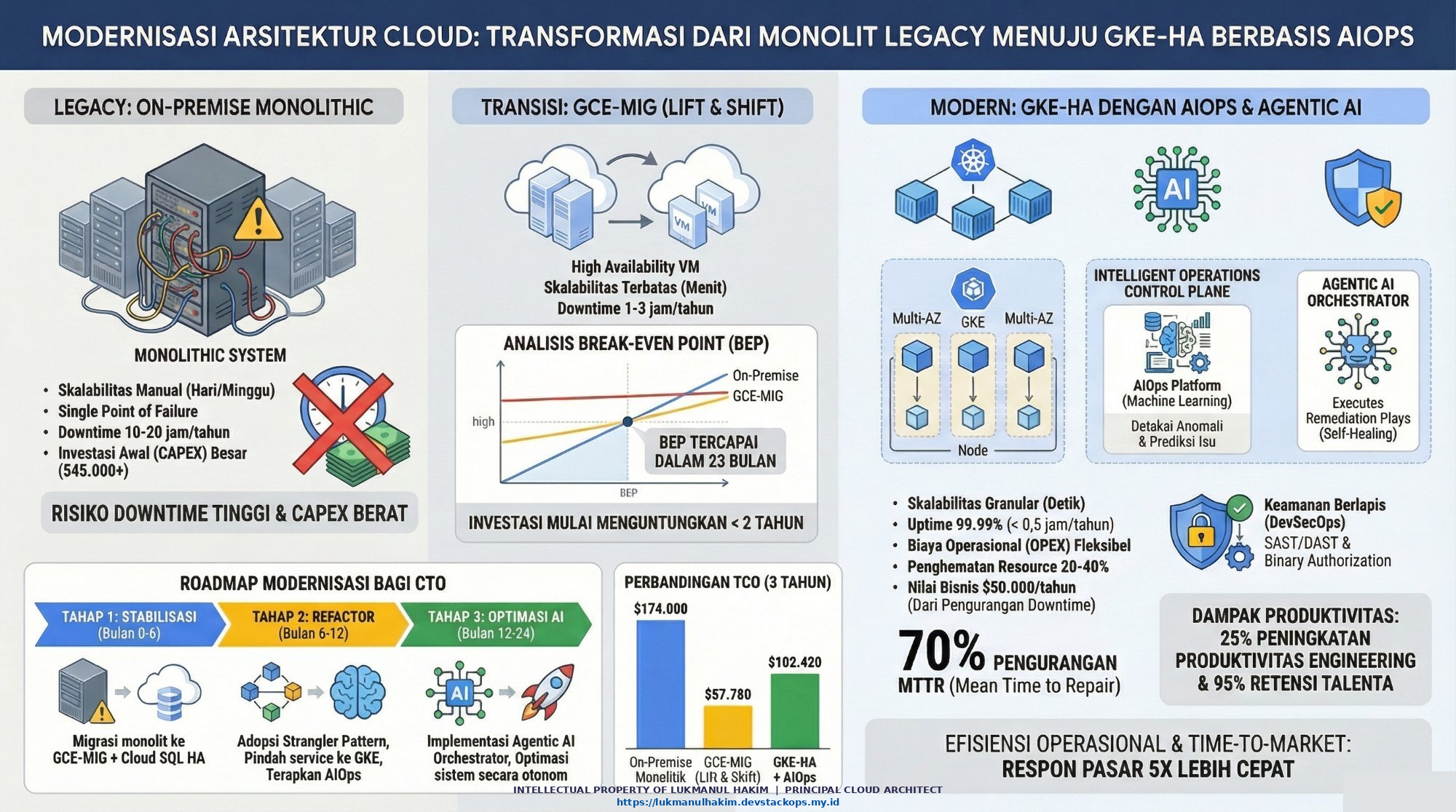
1. LEGACY STATE (2014)
Coupled Monolith · Single Point of Failure (SPOF) · MTTR 15h
2. MULTI-CLOUD STAGE
Terraform IaC · Containerization · GitOps Delivery
3. GKE-HA + AIOps (2026)
Stateless Microservices · Zero Trust · MTTR <300ms
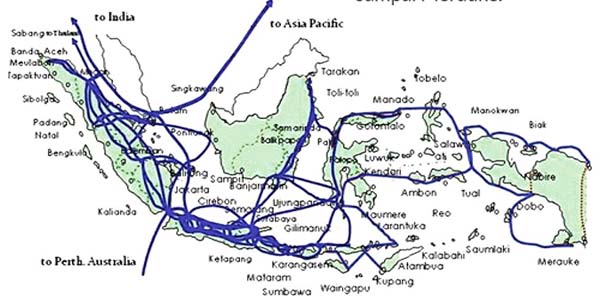
Consolidated view of 34 provinces · High Availability Active
Gateway: Batam (SG)
Expansion: HA Ready
Route: North & South
Tight dependencies and shared state databases. A single service failure triggers cascading cluster degradation across regional nodes.
Recovery Window: 8–15 Hours
Stateless microservices on Kubernetes. Automated failover, circuit breakers, and GitOps self-healing workflows.
Recovery Window: <300ms (Automated)
// Capital Efficiency Ledger
Downtime is not merely a technical glitch; it is an unbudgeted operational risk that impairs EBITDA. Applying standardized reliability modeling (IEC 60812 FMEA, ISO 31000) ensures enterprise software migrations maintain audit compliance and financial resilience.
VisasQ Inc. & Coleman Research Group · Global (Remote)
PT Altha Dyanusa Consulting · Jakarta, ID
Independent Technology & Architecture Mandates · Indonesia
PT Telkom Akses (Telkom Indonesia Group) · Directorate of Operation · Jakarta, ID
Biznet Networks · Jakarta, ID
// System Initialization (2011) · User: Lukmanul_Hakim
Verify on Microsoft Learn (AI-103)
ID: ac6c40d564fc4911b48506b04f269dac
ID: 55864fb403294d648d9d2130326a0842
ID: 319f538b-8769-4719-b93f-29b81814900c
ID: YT3X1MX1VFBE1K5V
ID: 1987298840-45/PROA/BLSDM/2024
ID: 0447256131-103/OA.DTS/2020
University of Mercu Buana Jakarta · Mar 2016 – Oct 2018 | GPA: 3.17 / 4.00
Undergraduate Thesis:
Hakim, L. (2018). Operational Risk Analysis Using Fault Tree Analysis and Failure Mode and Effect Analysis in the Process Testing of the FTTH Triple Play (IndiHome) Fulfillment System (Undergraduate thesis). University of Mercu Buana Jakarta.
Enterprise Model Orchestration · Microsoft AI-103 Validated
• Autonomous Agent Systems: Multi-agent orchestration via Semantic Kernel and Azure OpenAI
• Perception & Extraction: Multi-modal Computer Vision and Azure Document Intelligence
• Enterprise AI Governance: Token quota engineering, safety guardrails, and Zero Trust API security
• Cloud-Native Deployment: Containerized AI workloads deployed on Azure Container Apps with CI/CD